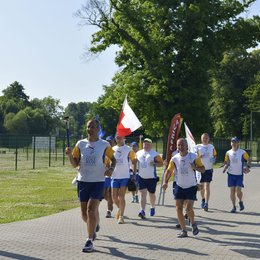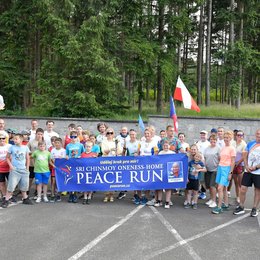


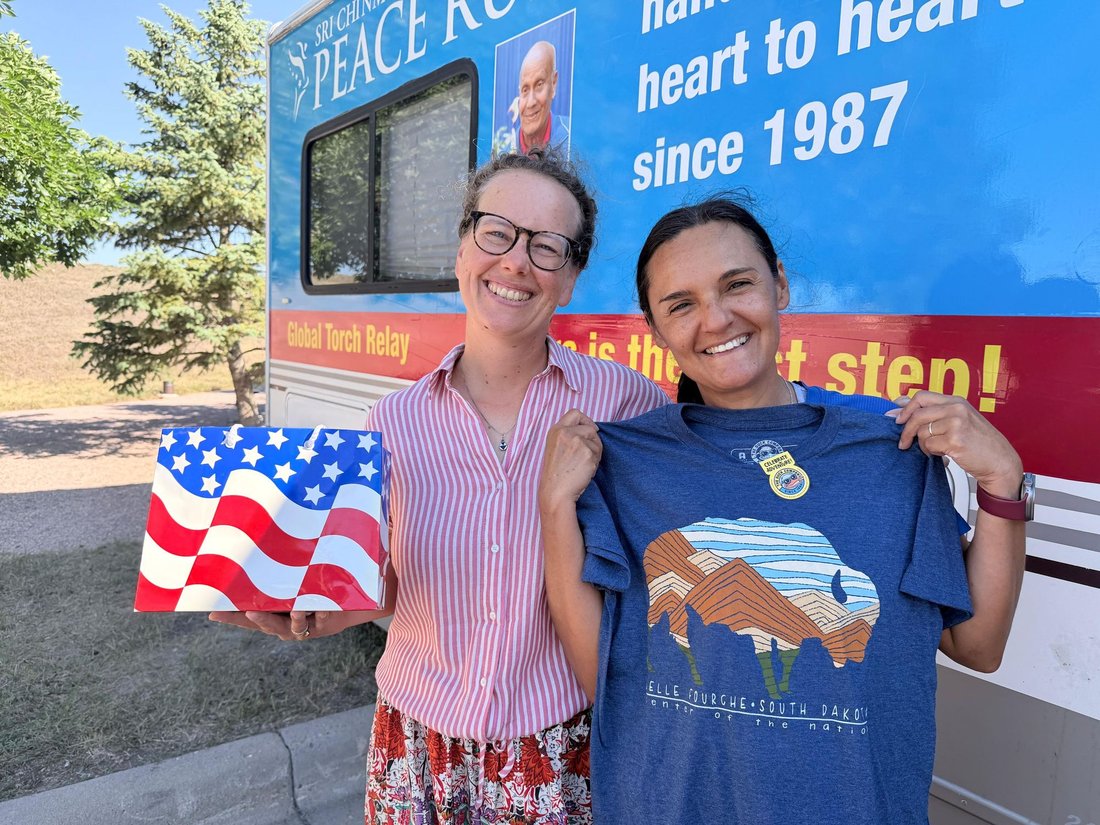
Santiva and Chintamani left us today- we will miss their dedicated service to the peace run in so many ways, as well as all the joy and enthusiasm they both brought!

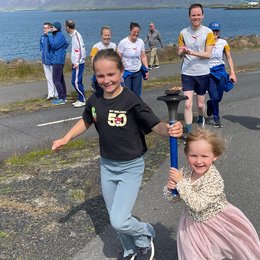
We met Karen from Chattanooga, TN. She is attempting to do a running race in all 50 states. She will be running a half marathon in Spearfish, SD tomorrow to complete her 49th state over her lifetime. Only one to go! Congrats Karen!
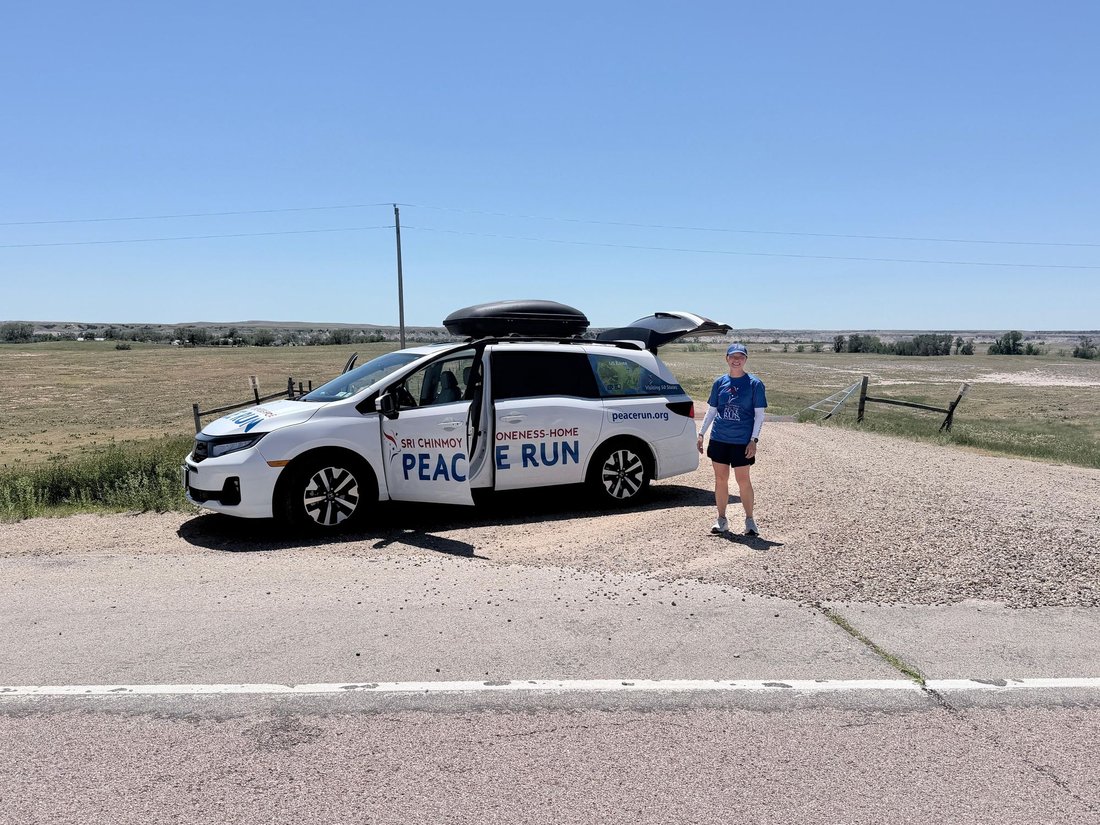
Pearl!
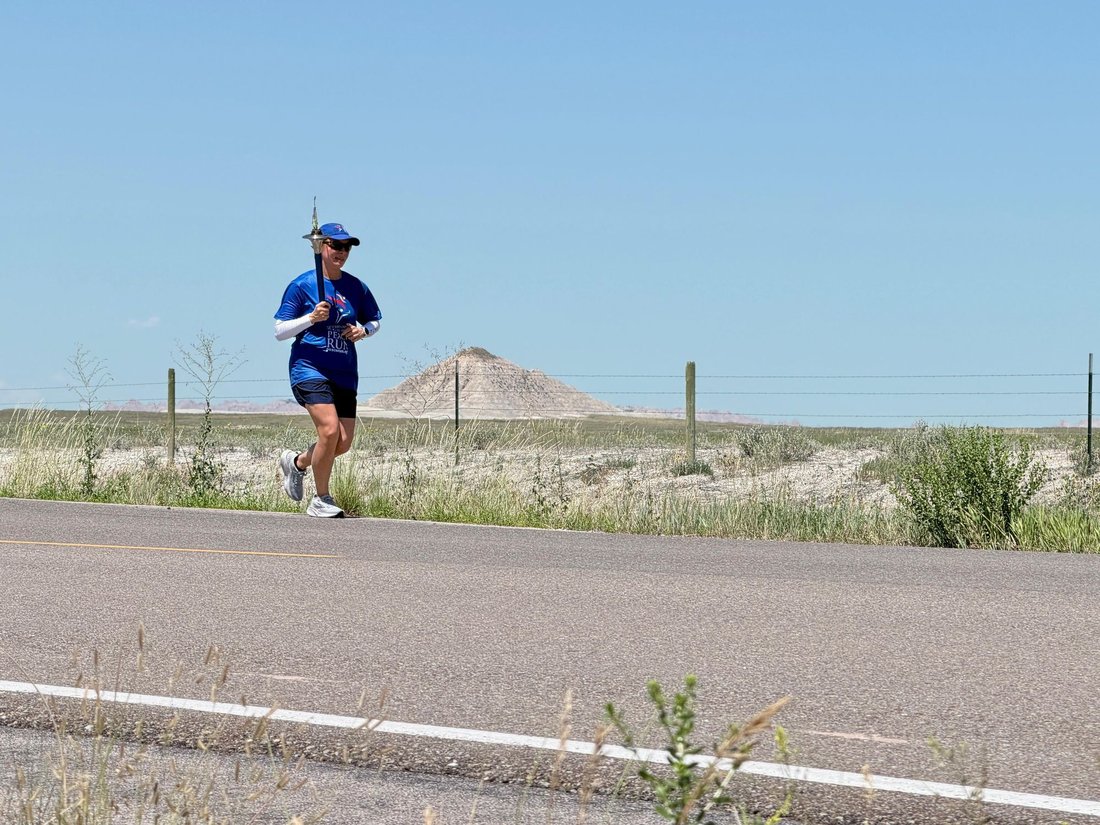
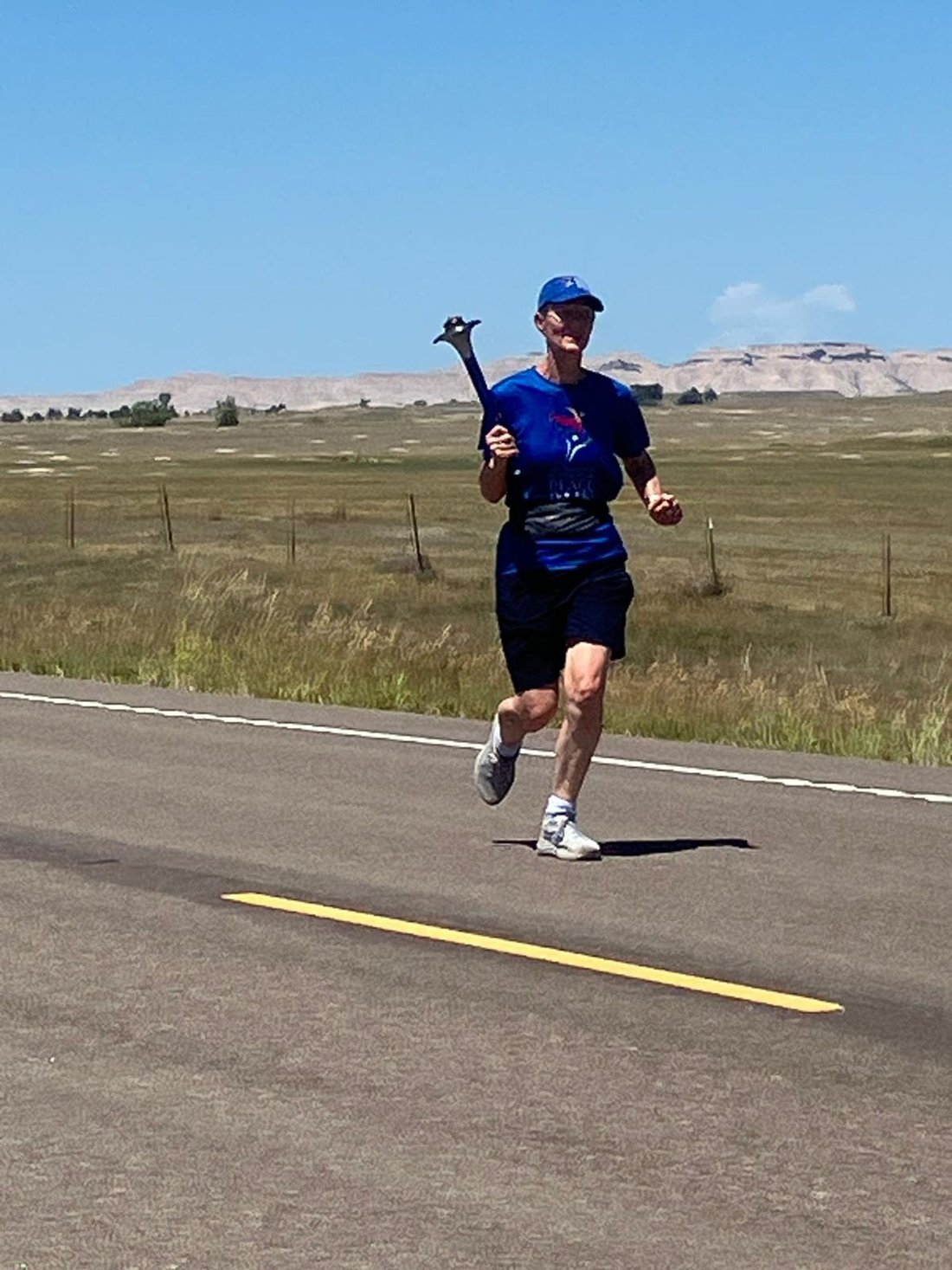
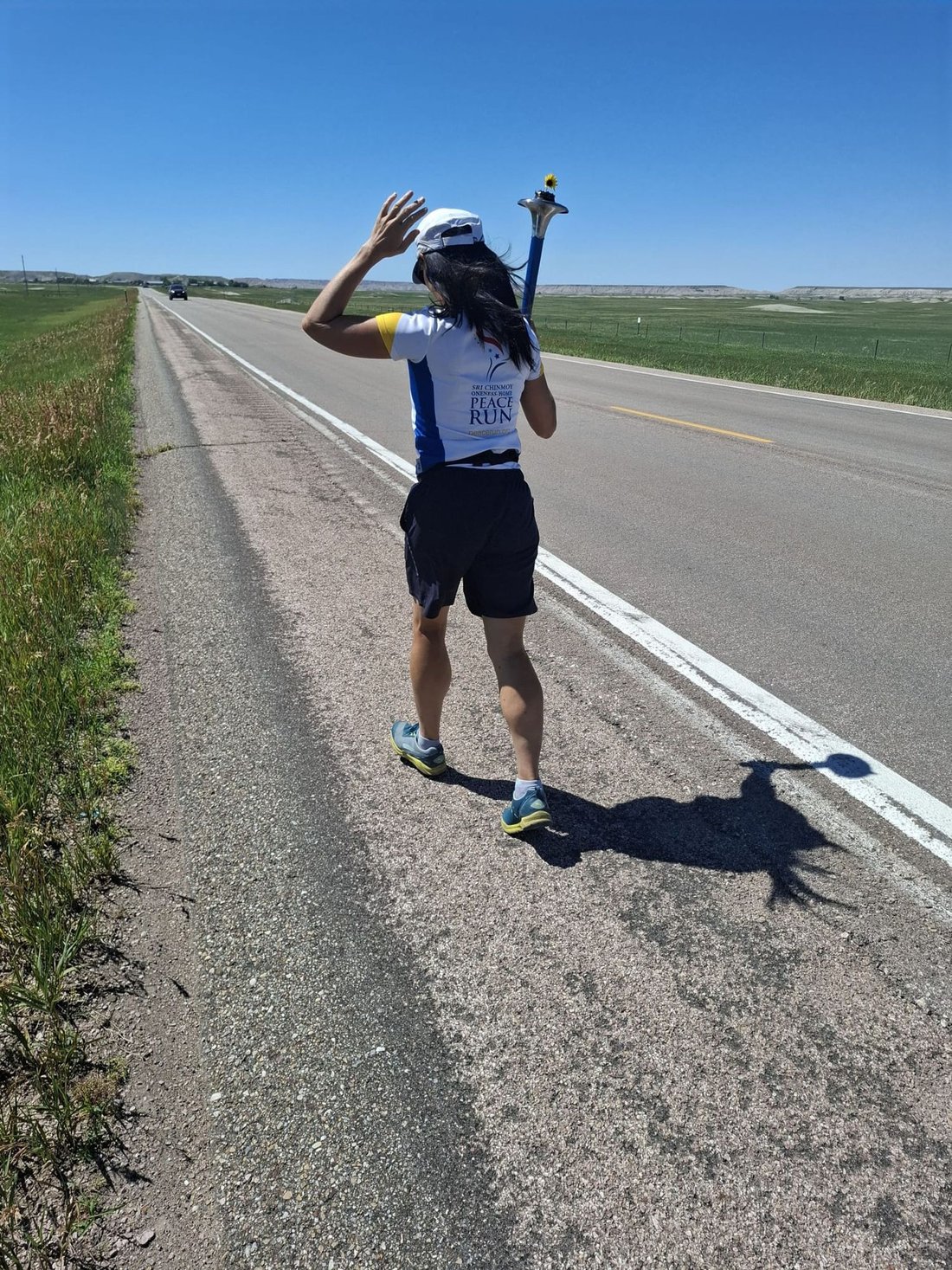
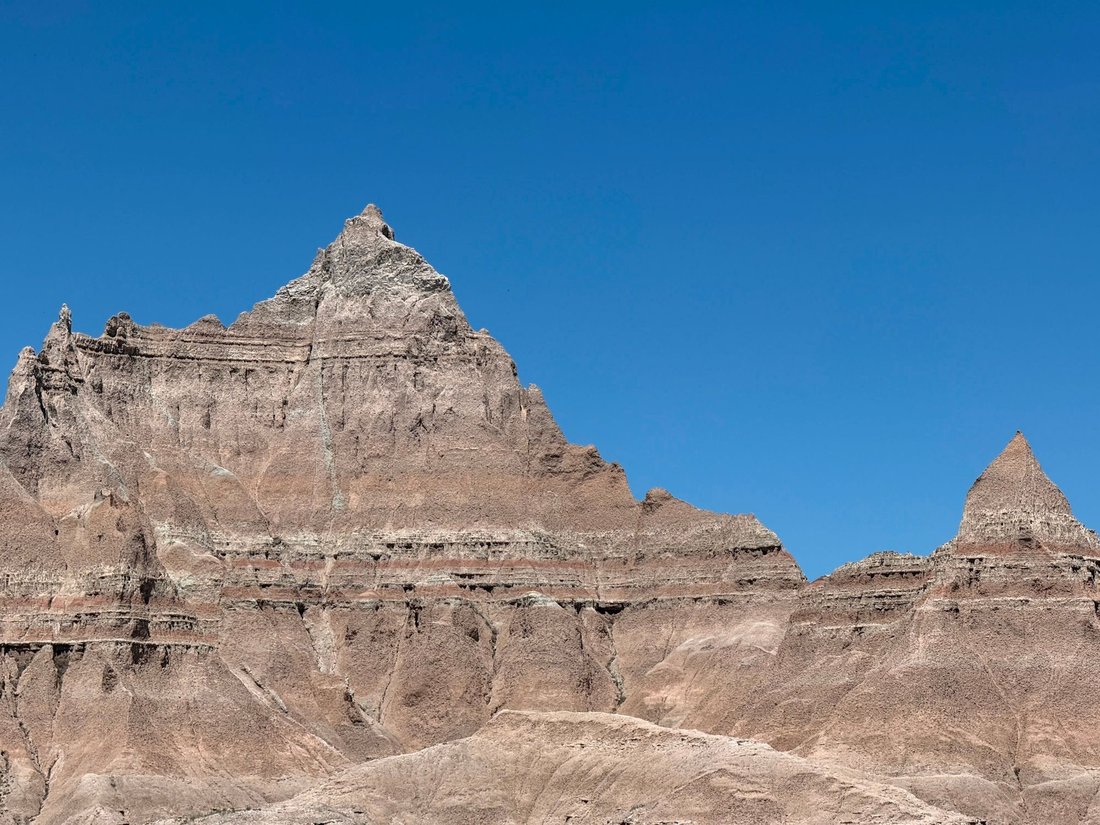
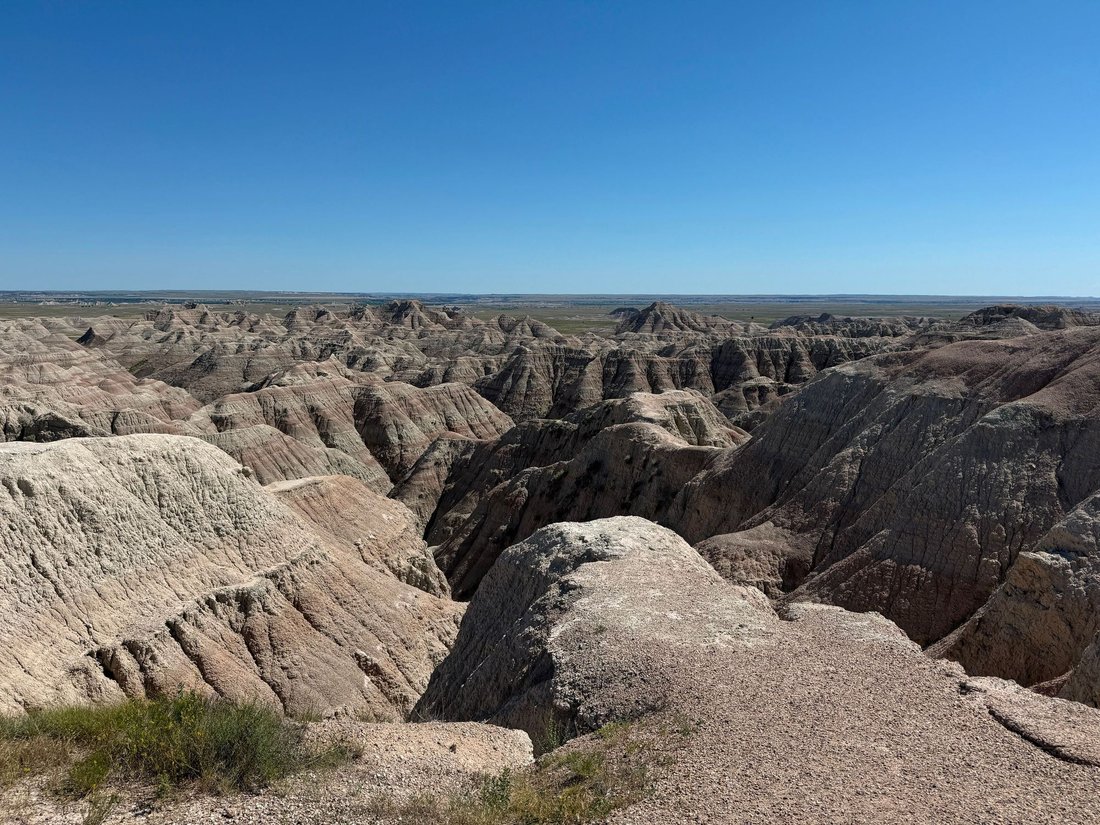
It was a scorching hot day running towards the Badlands, and the landscape began to transform dramatically!
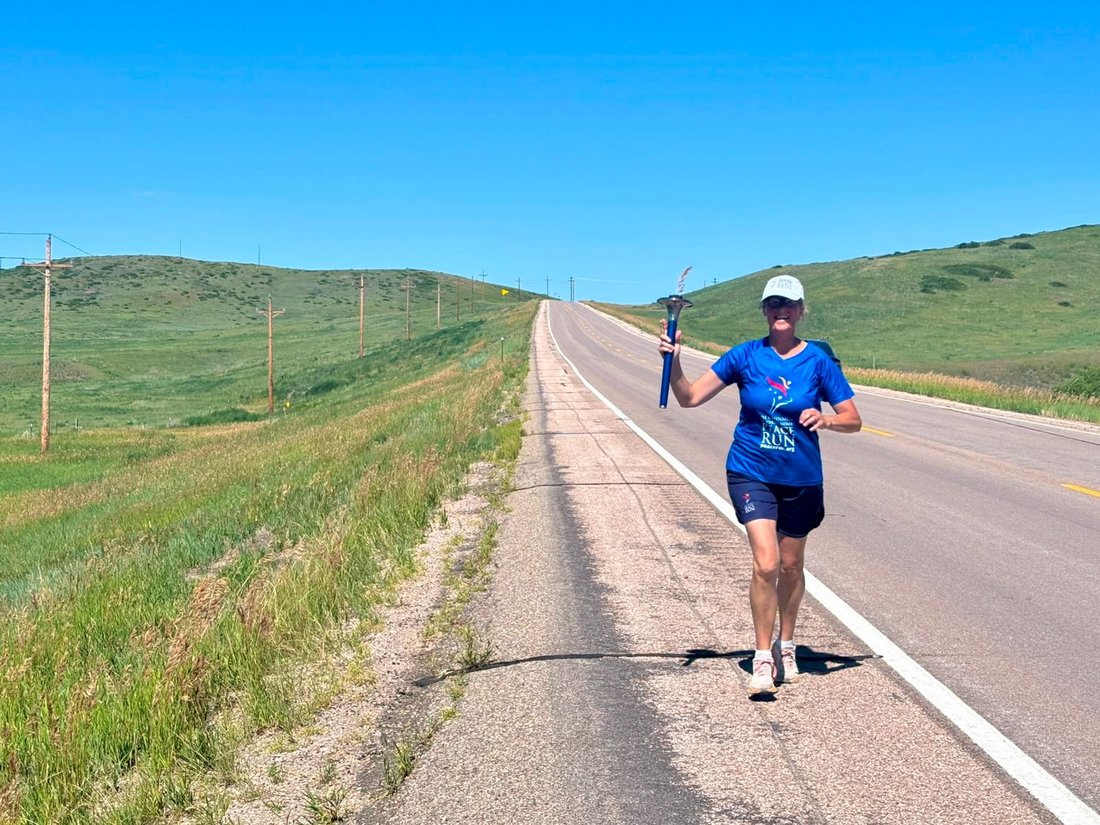
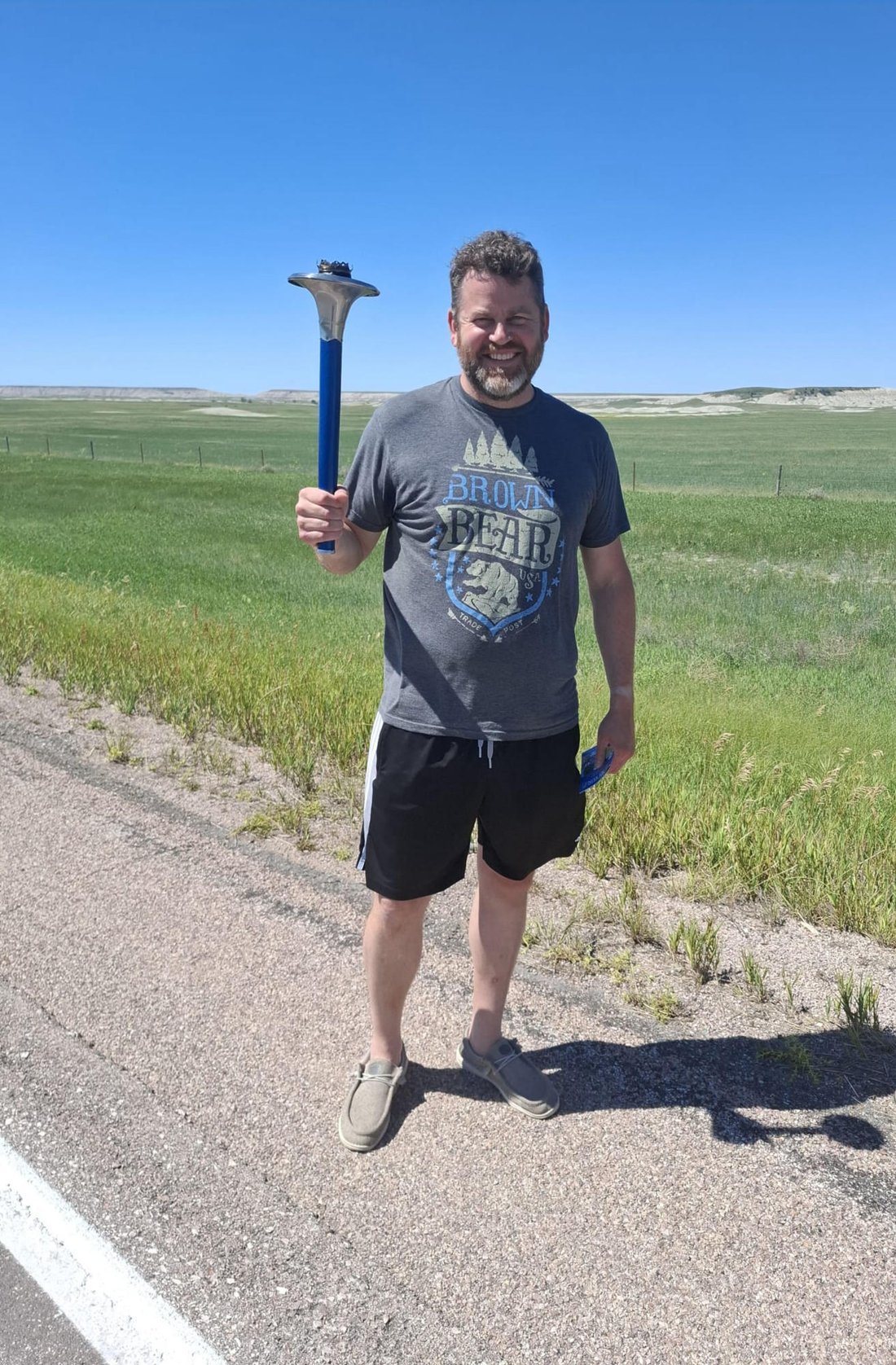
John Wright from Chicago pulled up next to our team today, asked all about the Peace Run and expressed his enthusiastic support!
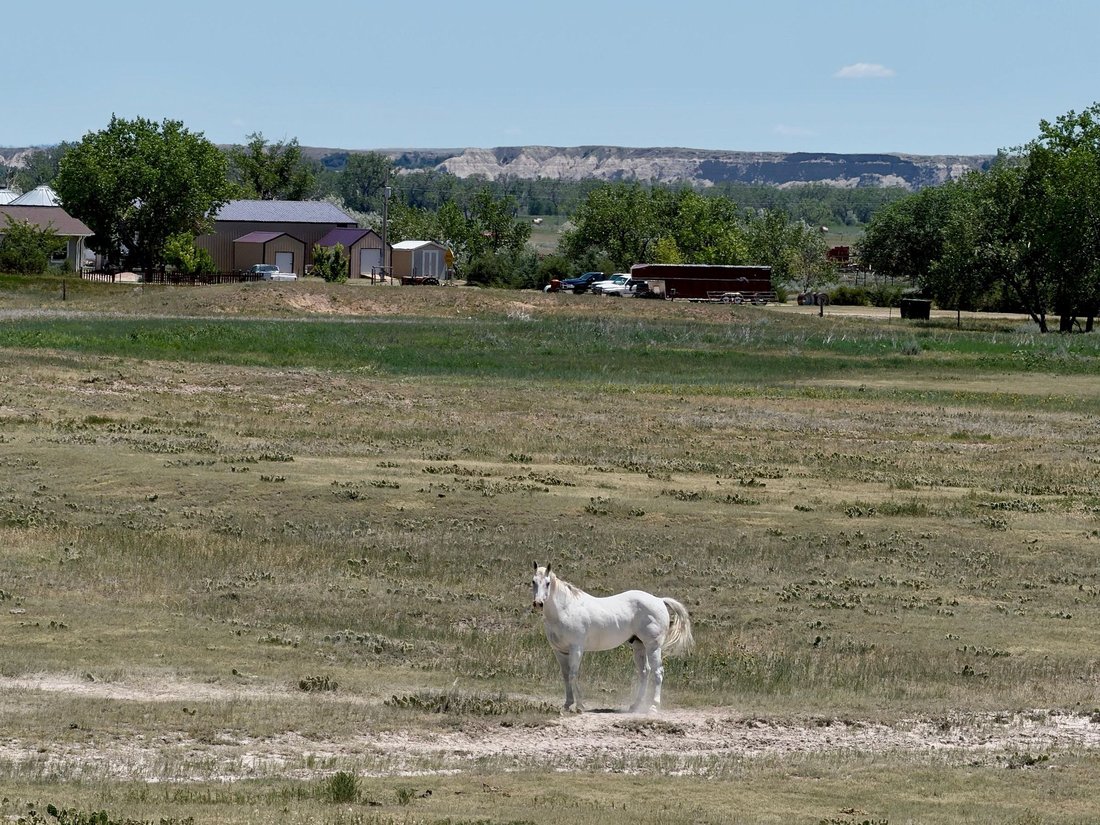
Nearby horses and cows are always intrigued by the peace runners!
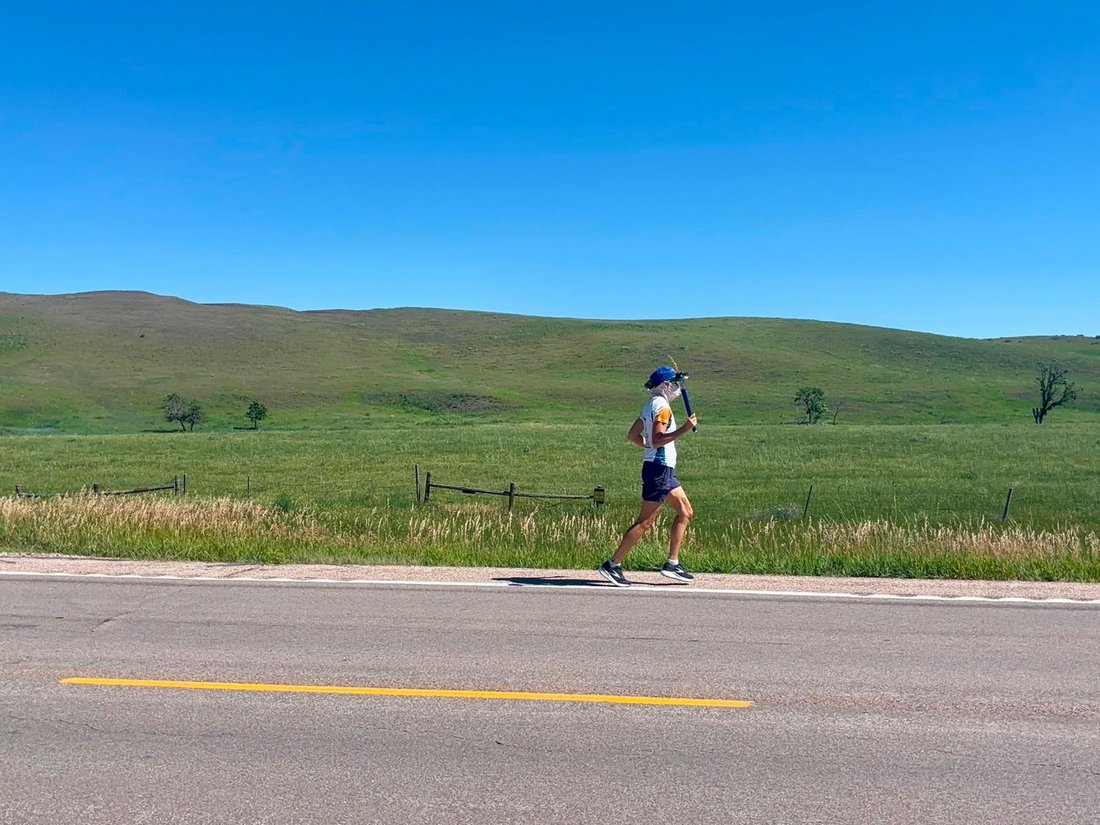
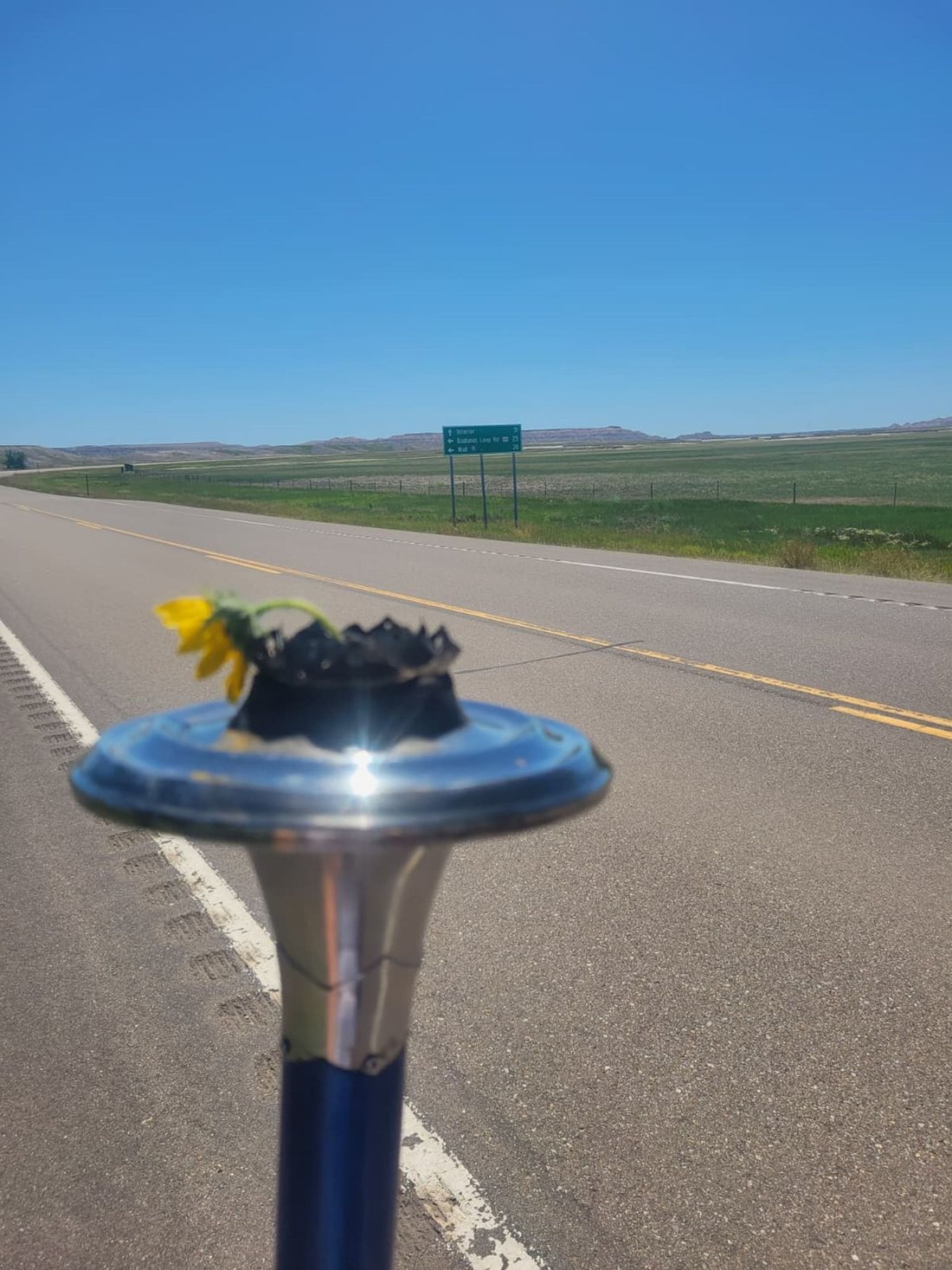
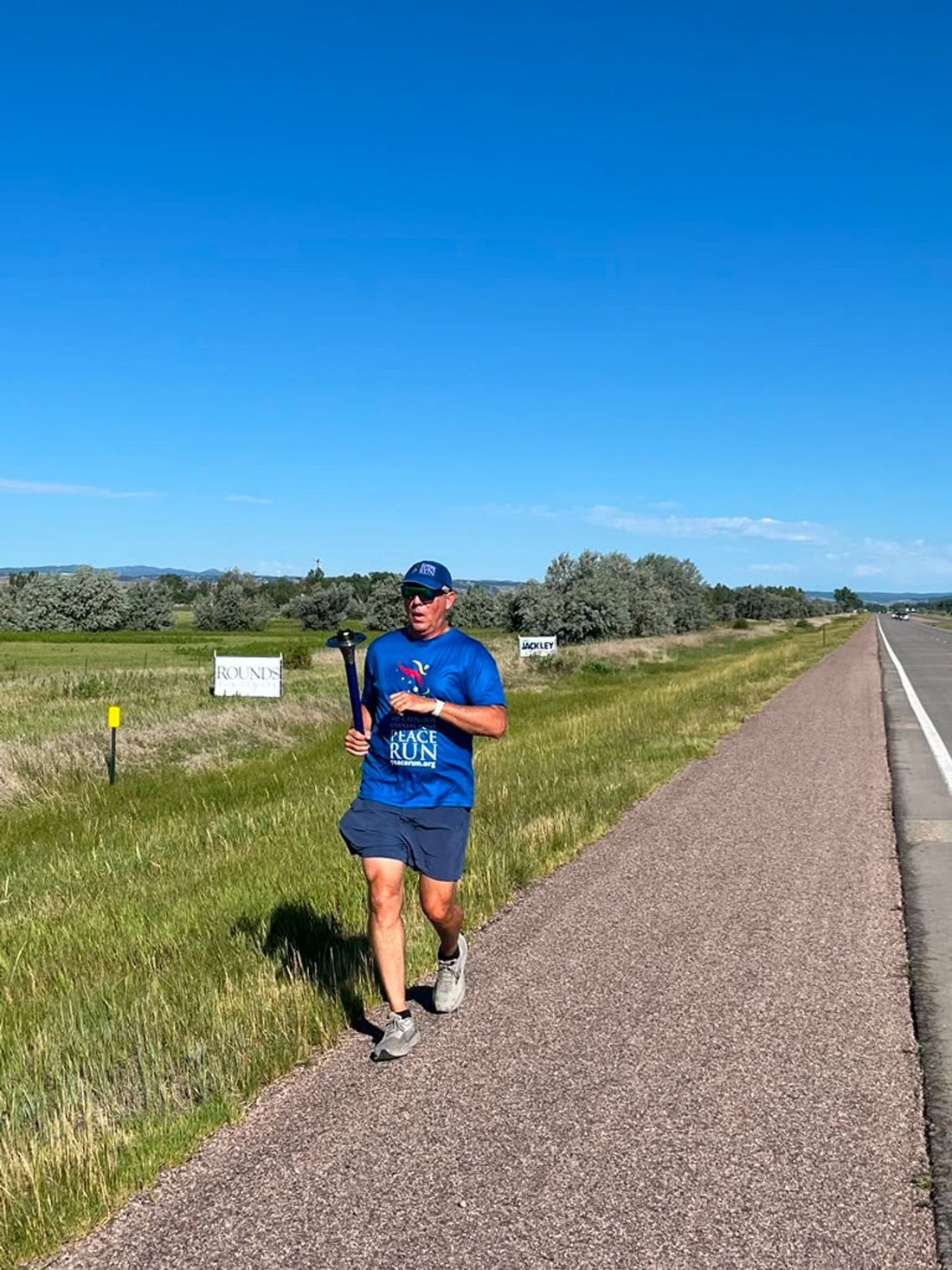
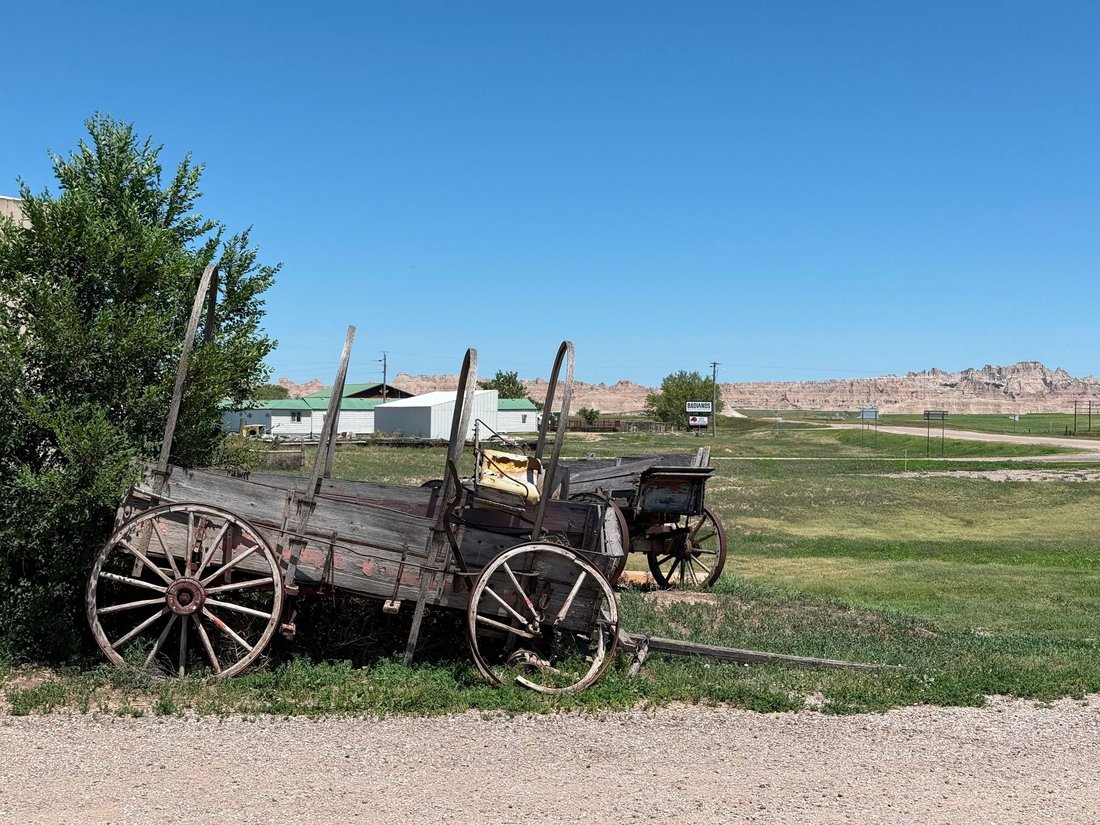
You never know what you will spot on the side of the road out here!
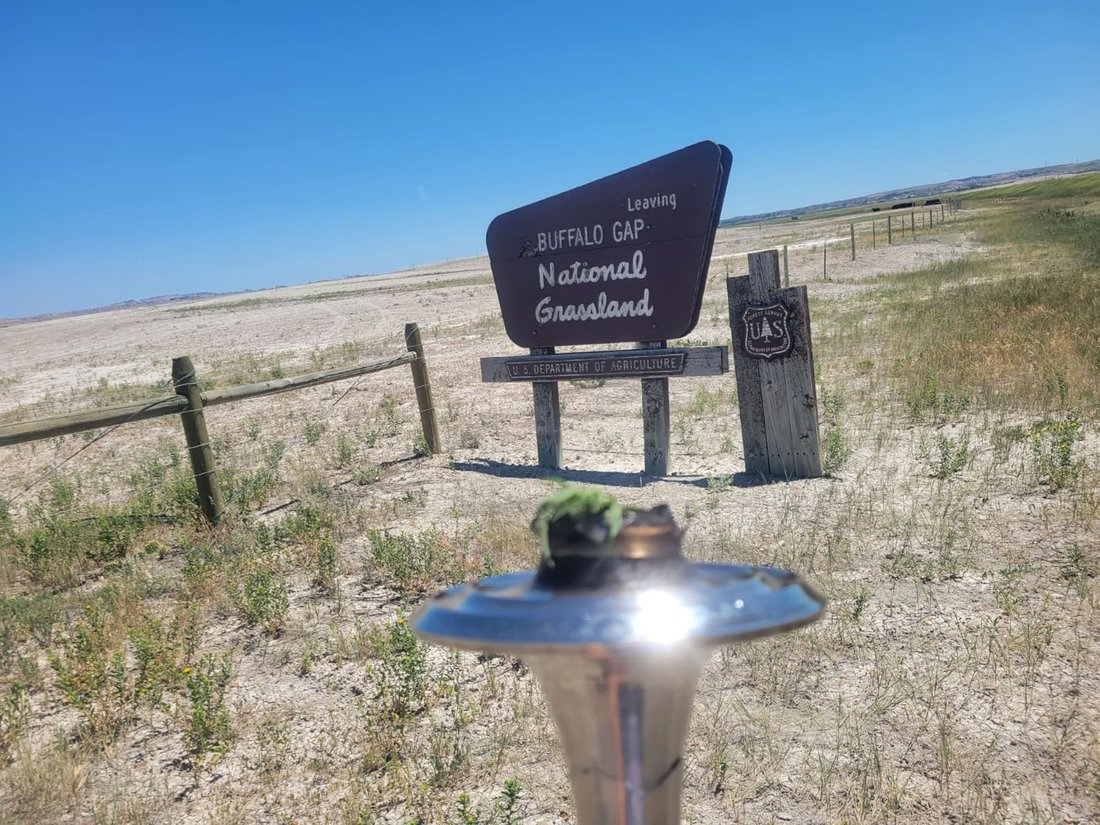
Today we learned of the vital role grasslands play in our eco-system! A prairie is a large, open expanse of grasslands. A mixed-grass prairie is a grassland where grasses of many different heights grow. There are over 400 plant species in Badlands National Park. Although trees, shrubs, and forbs grow in the Badlands, grasses dominate the landscape.
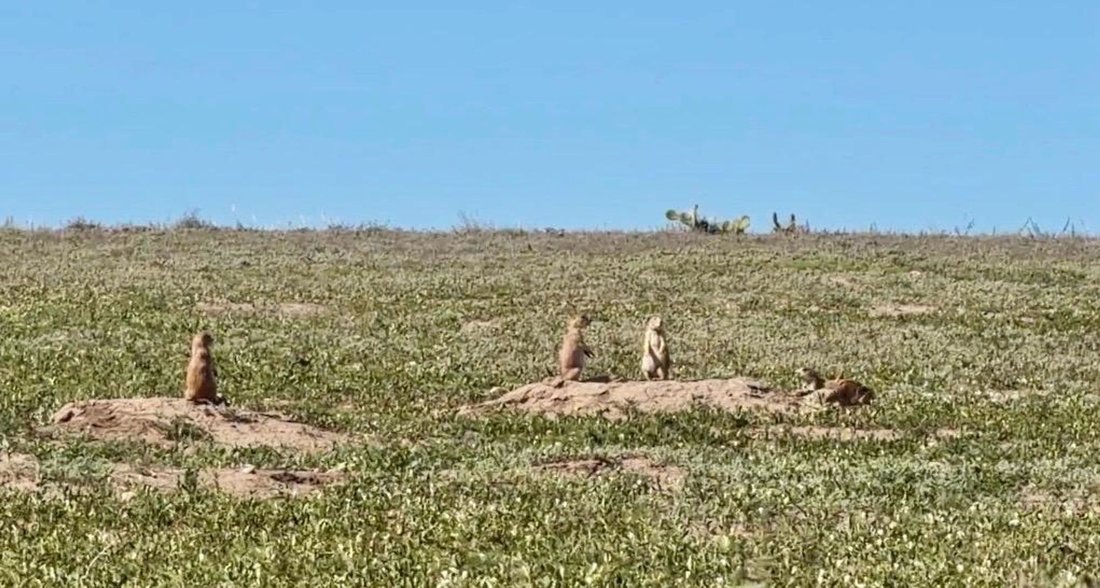
Prairie dogs live in underground colonies sometimes referred to as “towns,” like Robert’s Prairie Dog Town on Badlands Loop Road. Prairie dogs build their homes underground to protect against predation and flash flooding. These colonies can be massive, with the largest ever recorded prairie dog town encompassing 25,000 square miles – an area greater than the state of West Virginia. However big a prairie dog town may be, it is likely to be equally as complex. Prairie dog towns are divided up into different units with different purposes.
A coterie is a unit of a prairie dog town encompassing about 1 acre. A coterie typically has 50-60 entrance points and belongs to a single family of prairie dogs, including an adult male, many adult females, and their offspring. Members of the same coterie will kiss or sniff upon identifying each other. Prairie dog towns may also include side chambers for use as a sleeping space or storage room and back doors for extra escape routes.
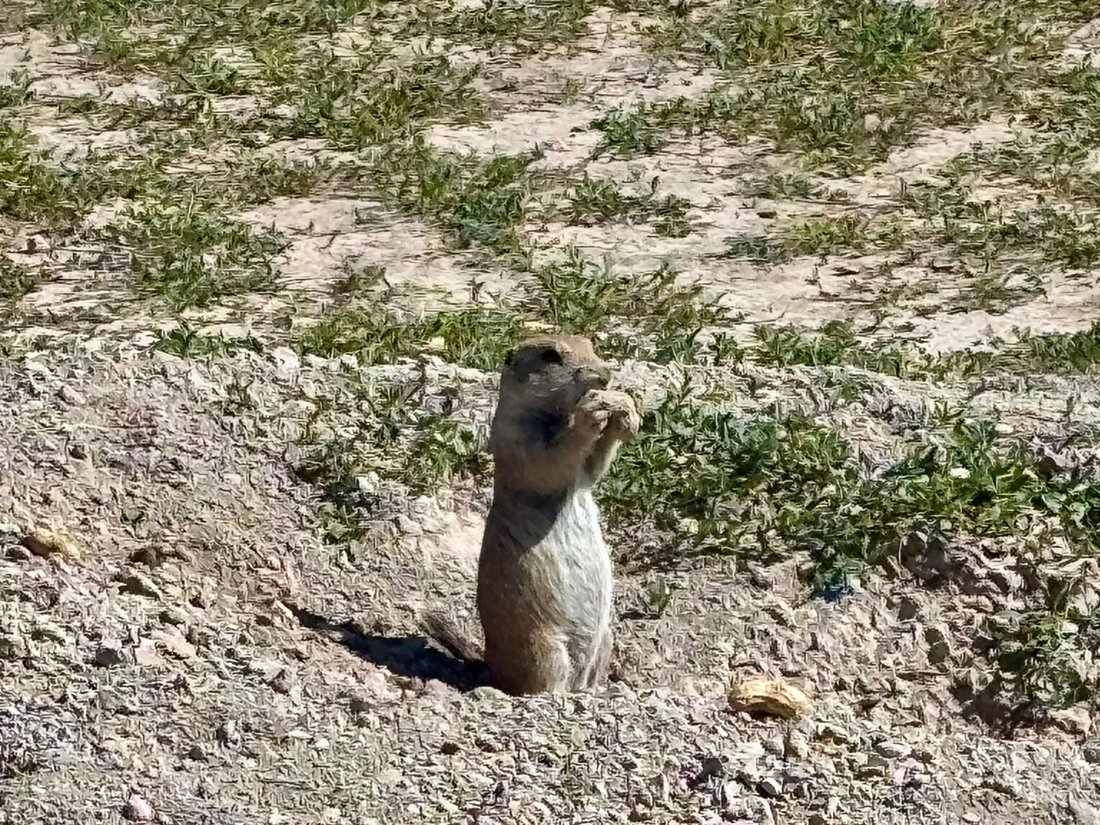
Prairie dogs are a keystone species. A keystone species is one that many other species, both plant and animal, depend upon for survival. Keystone species are incredibly important to their ecosystems, and if removed, the ecosystem itself may collapse. Prairie dogs serve as a prairie keystone species by getting eaten, making homes for other animals, clipping vegetation, and much more.
One unique aspect of prairie dog life is communication. Some scientists believe that prairie dogs have one of the most complex animal languages ever decoded. Although a prairie dog’s “bark” may sound like a simple squeak or yip to us, it means much more to a prairie dog’s ear! On a basic level, prairie dogs can signal different threats. For example, they can communicate the difference between a coyote and a domestic dog. In fact, scientists think that prairie dogs may have developed such complex language from a need to respond to a diverse array of predators, all with different hunting strategies. In addition to identifying specific threats, prairie dogs can further communicate size, shape, color, and speed. A prairie dog can say so much more than, “A human is approaching!” They can get as specific as, “A tall human in a blue shirt is approaching rapidly!”
fx
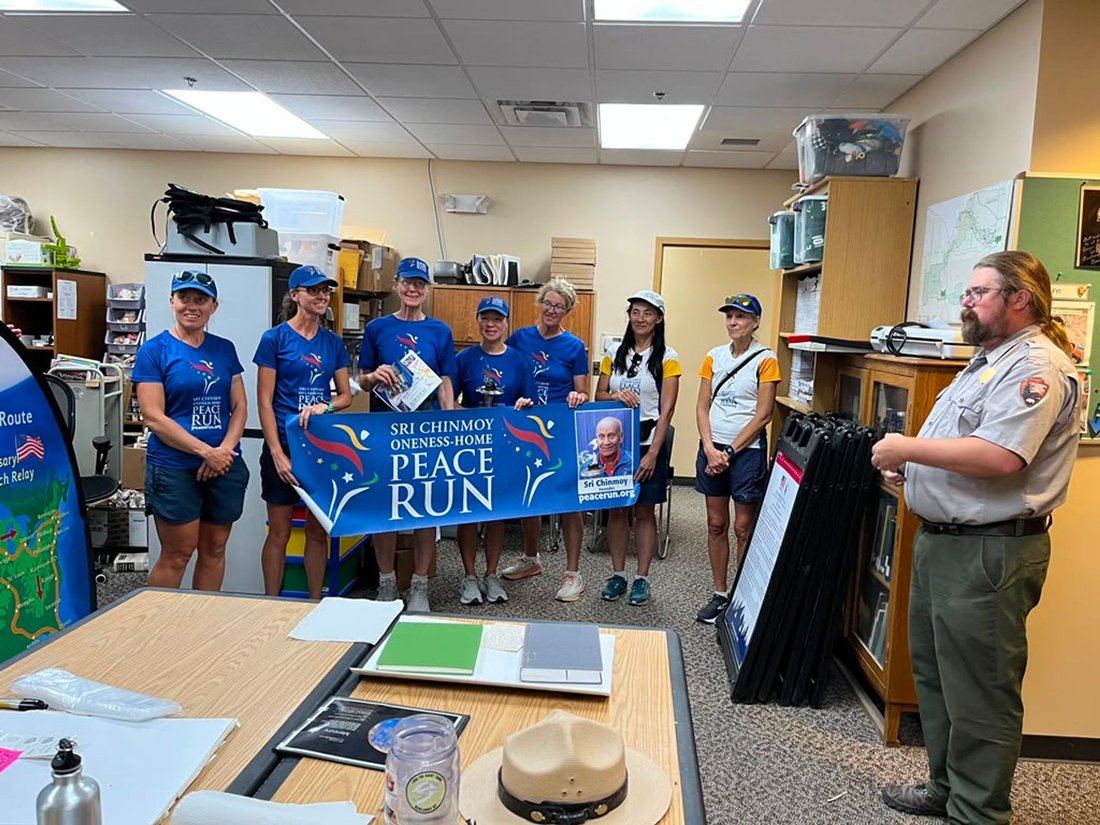
Ranger Ed Welsh welcomed us to Badlands National Park, sharing a wealth of knowledge with us!

We were thrilled to learn many interesting facts about the stars, the grasslands, dinosaurs and the incredible ancient history of the Badlands area and beyond! Thanks to Ranger Ed and Chuck, a volunteer with a great passion for everything Badlands, and also peace!
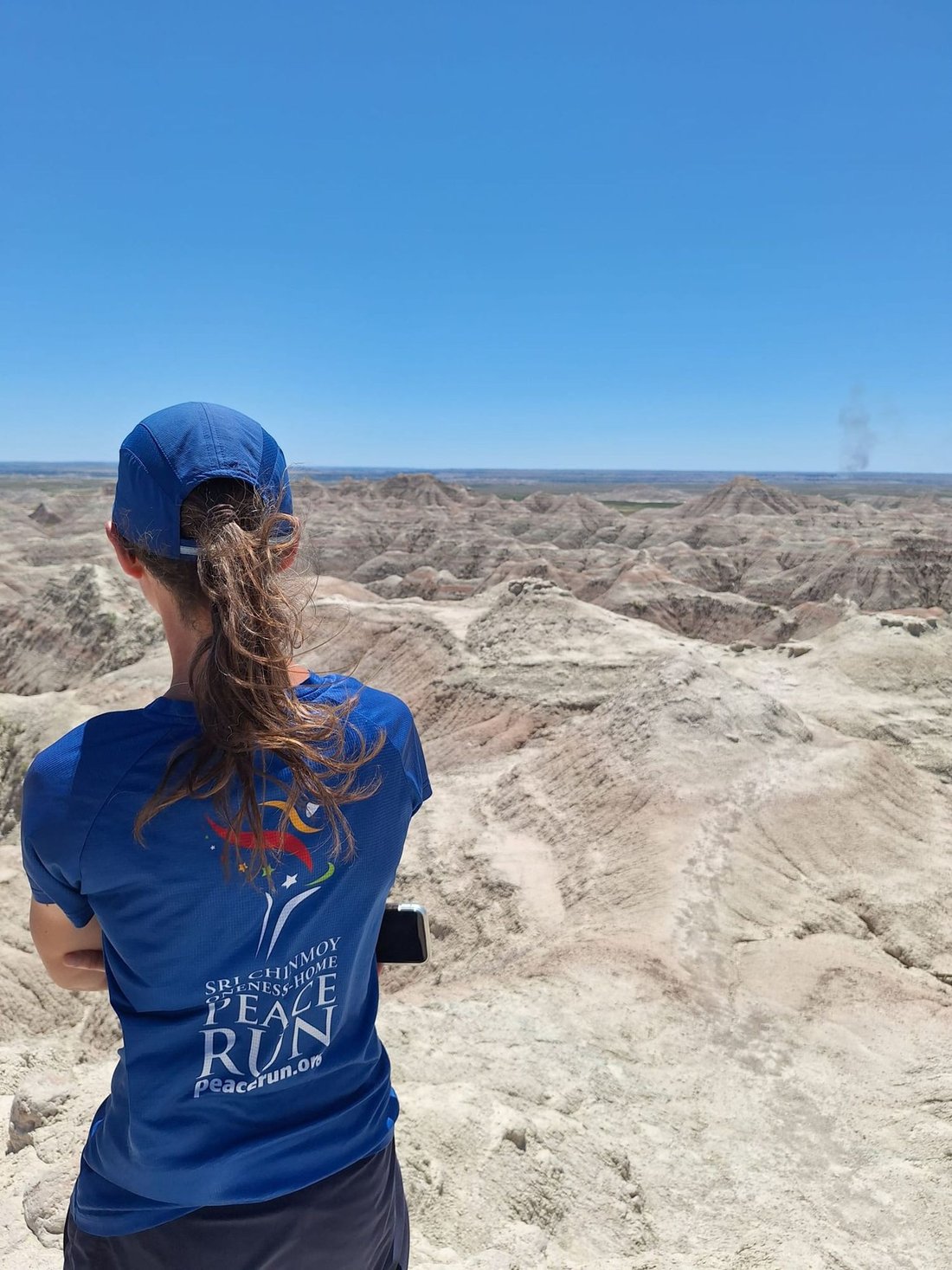
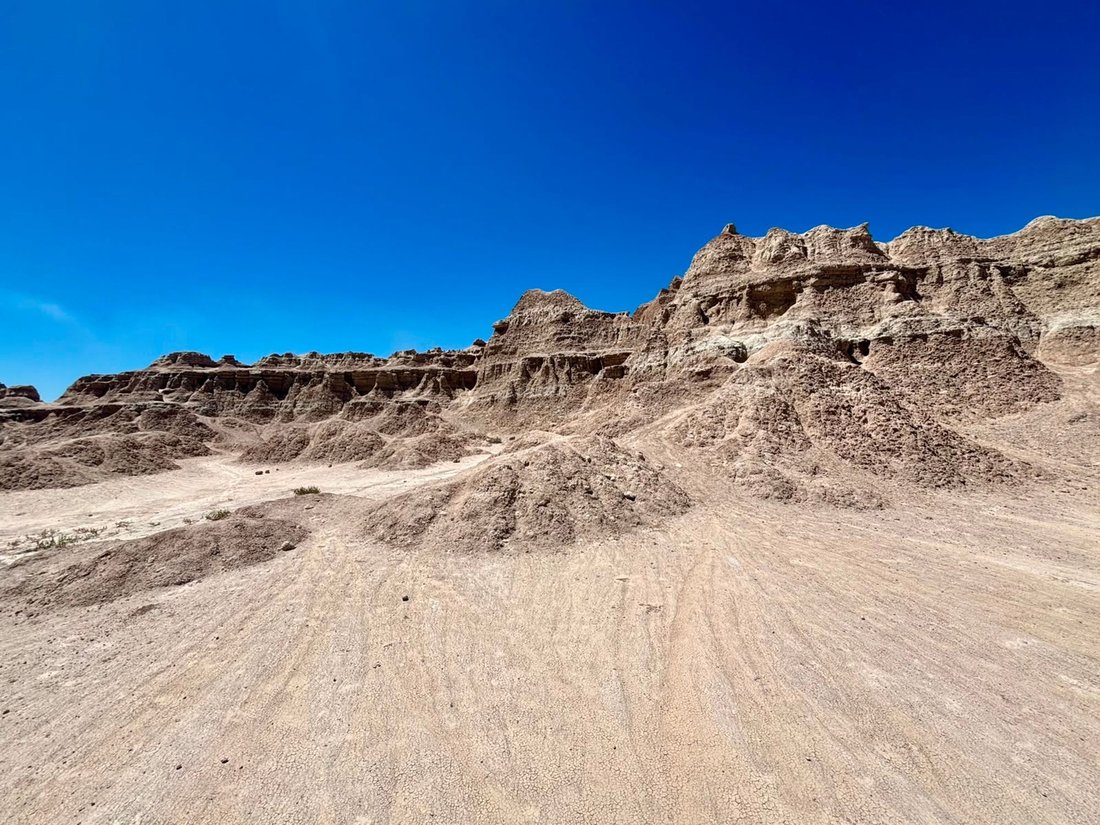
Finally it was time for us to experience the Badlands for ourselves!
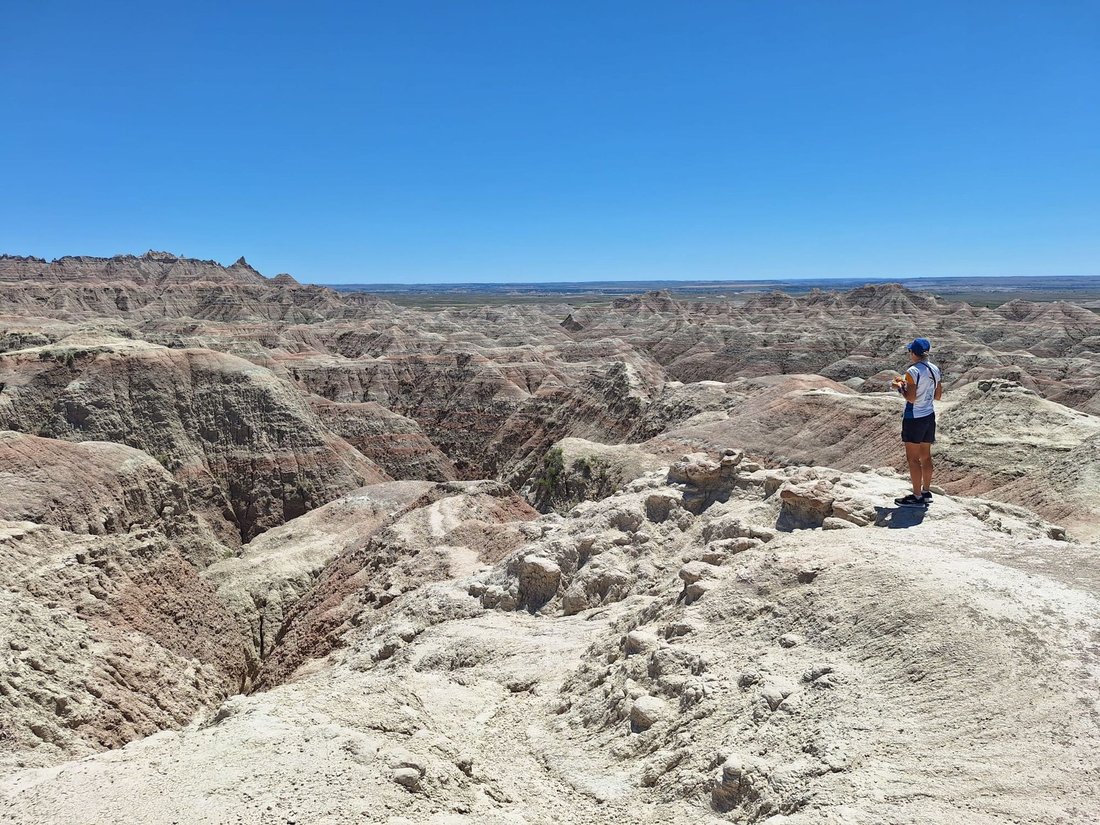
The Badlands were formed through a two-part geological process of deposition and rapid erosion. Over millions of years, an ancient inland sea and rising mountains laid down thick, colorful layers of sediment and volcanic ash. Over the last 500,000 years, flowing rivers and harsh weather carved these layers into the dramatic spires, buttes, and canyons seen today.
All facts about the Grasslands, Prarie Dogs The Badlands and the Night Sky Viewing were sourced from the National Parks website.
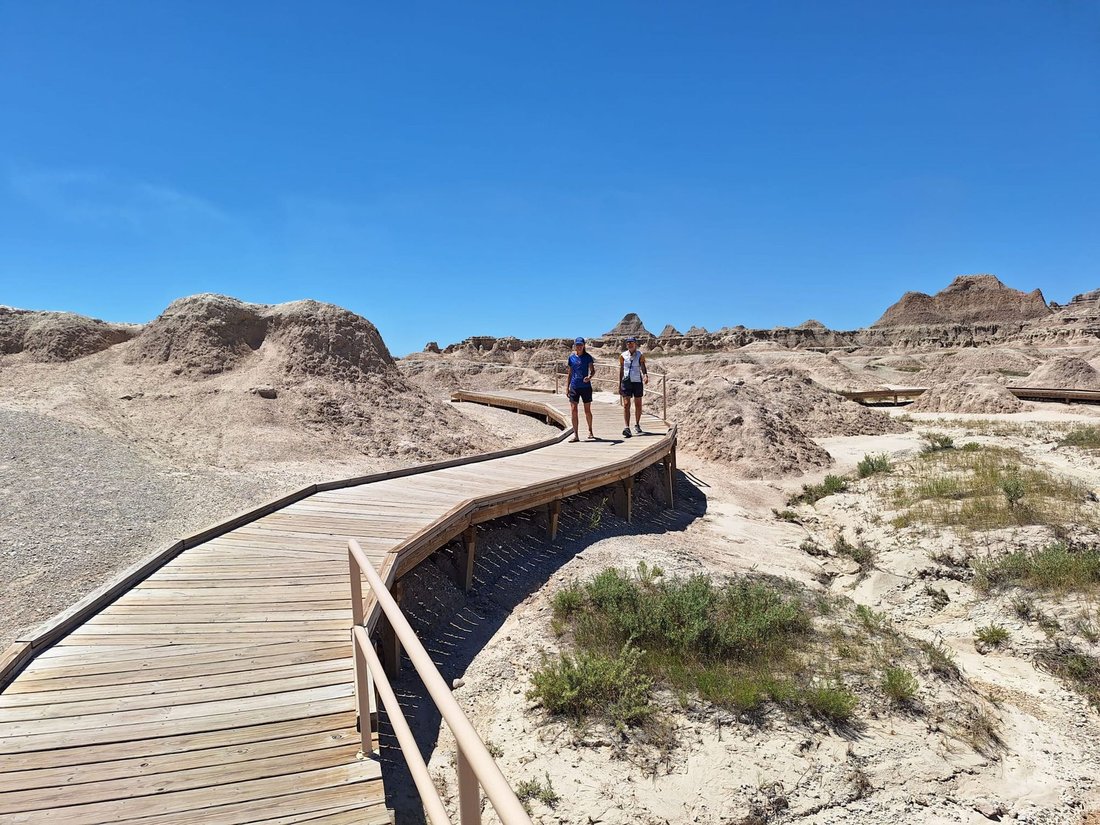
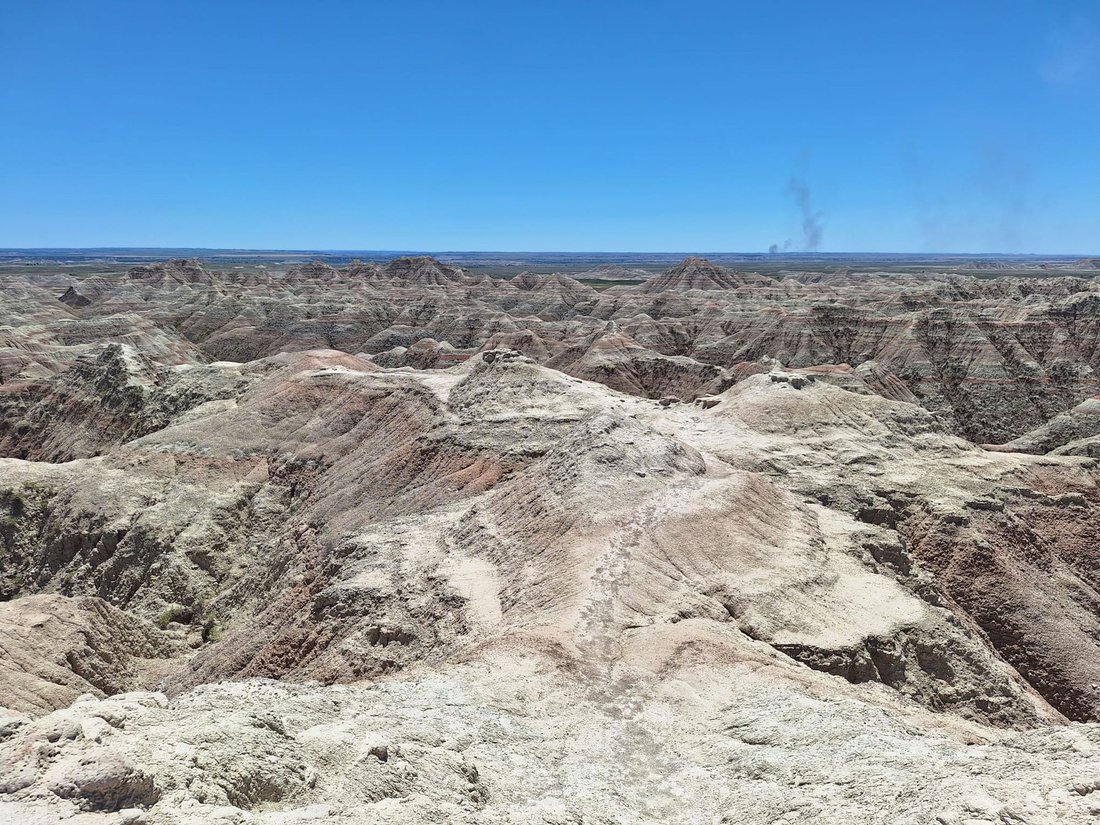
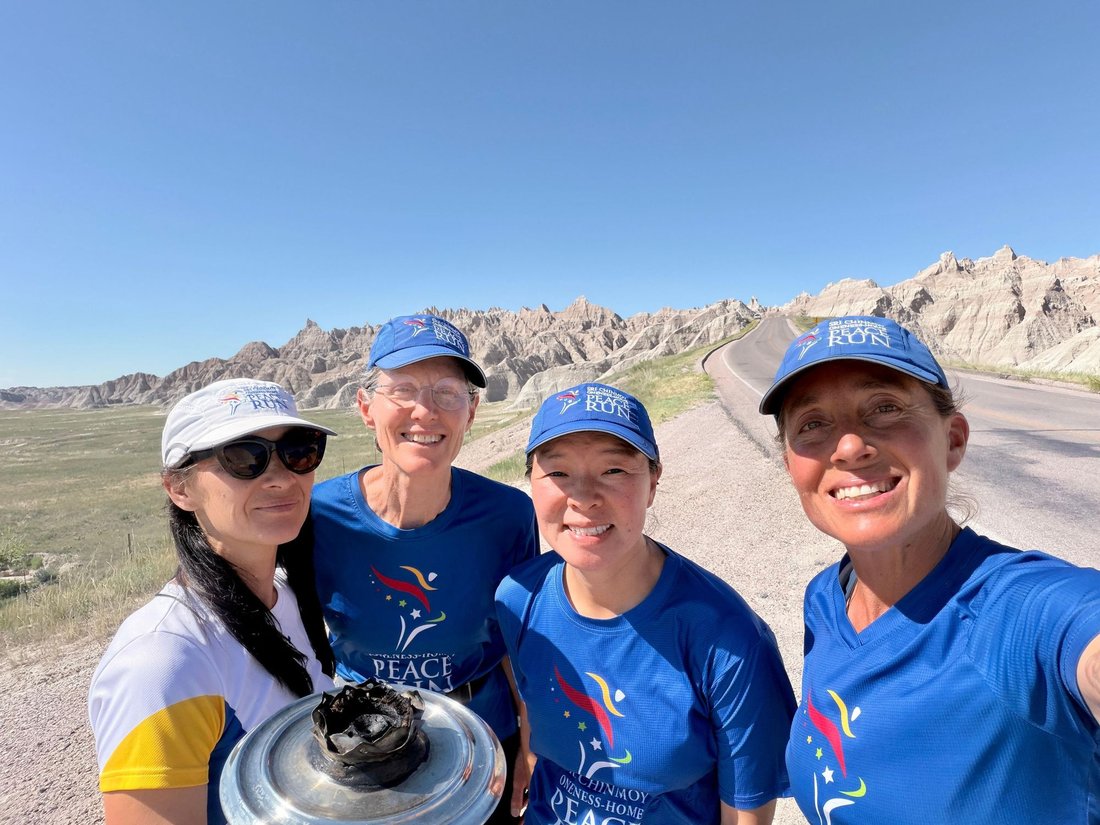
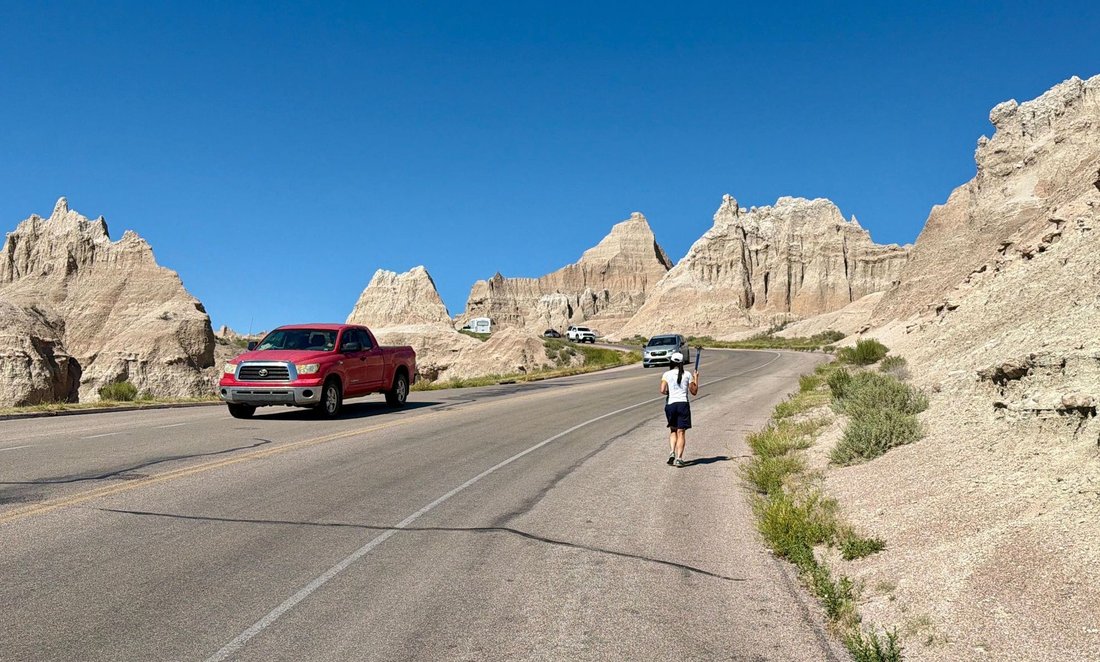
Photos cannot adequately depict the feeling of being immersed in this unbelievably surreal landscape- or how hot it was!!
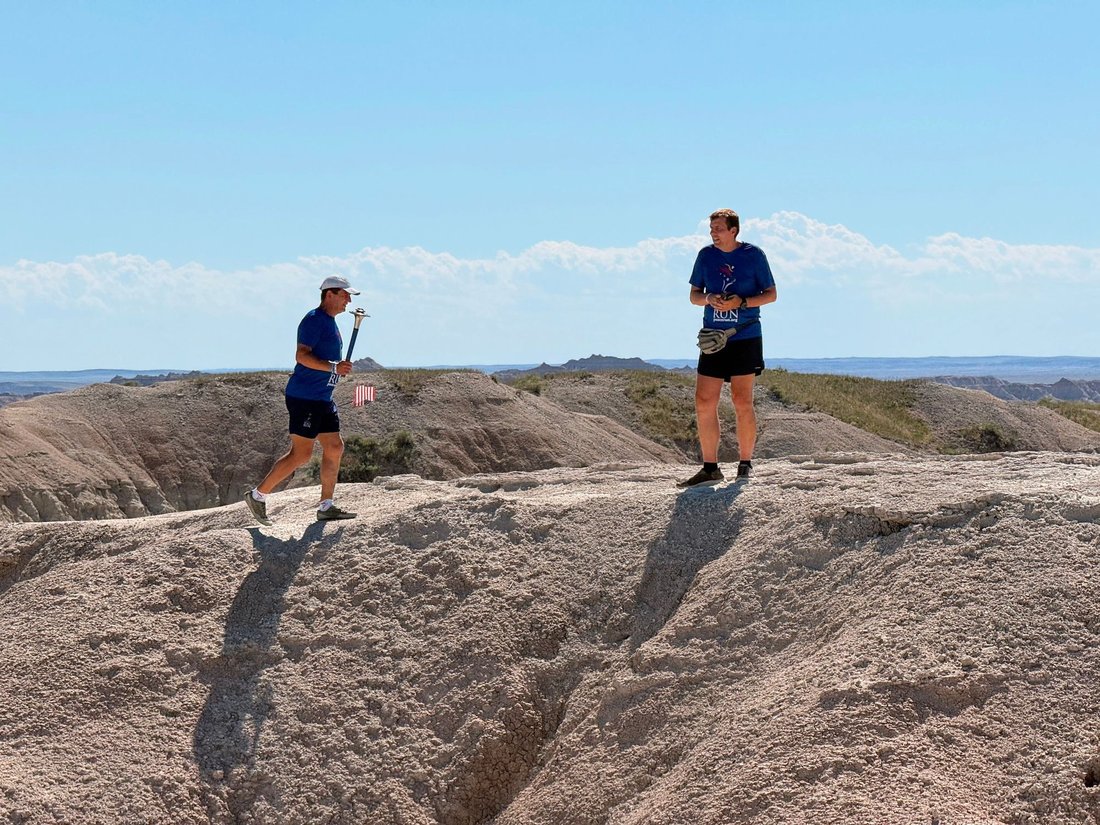
Our two Hungarian teammates enjoying the landscape!
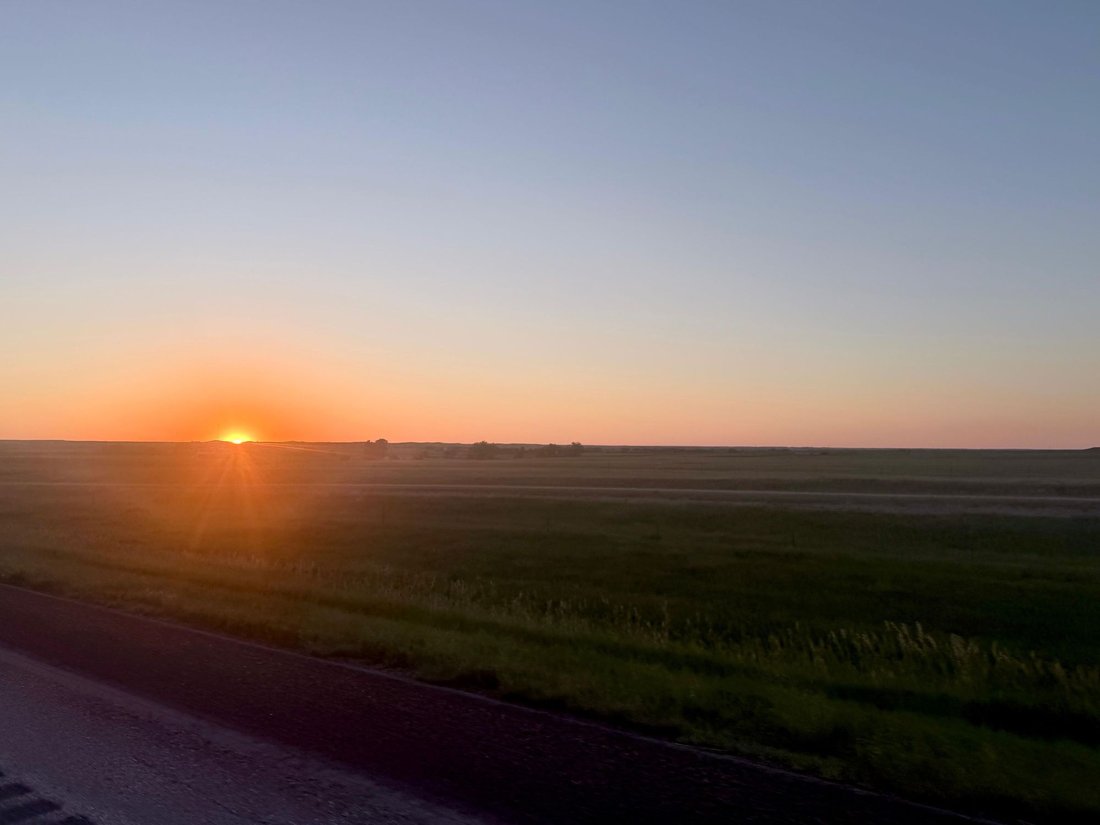
We could not resist going back to the Park for the evening Night Sky program, and enjoyed a beautiful sunset on the way.
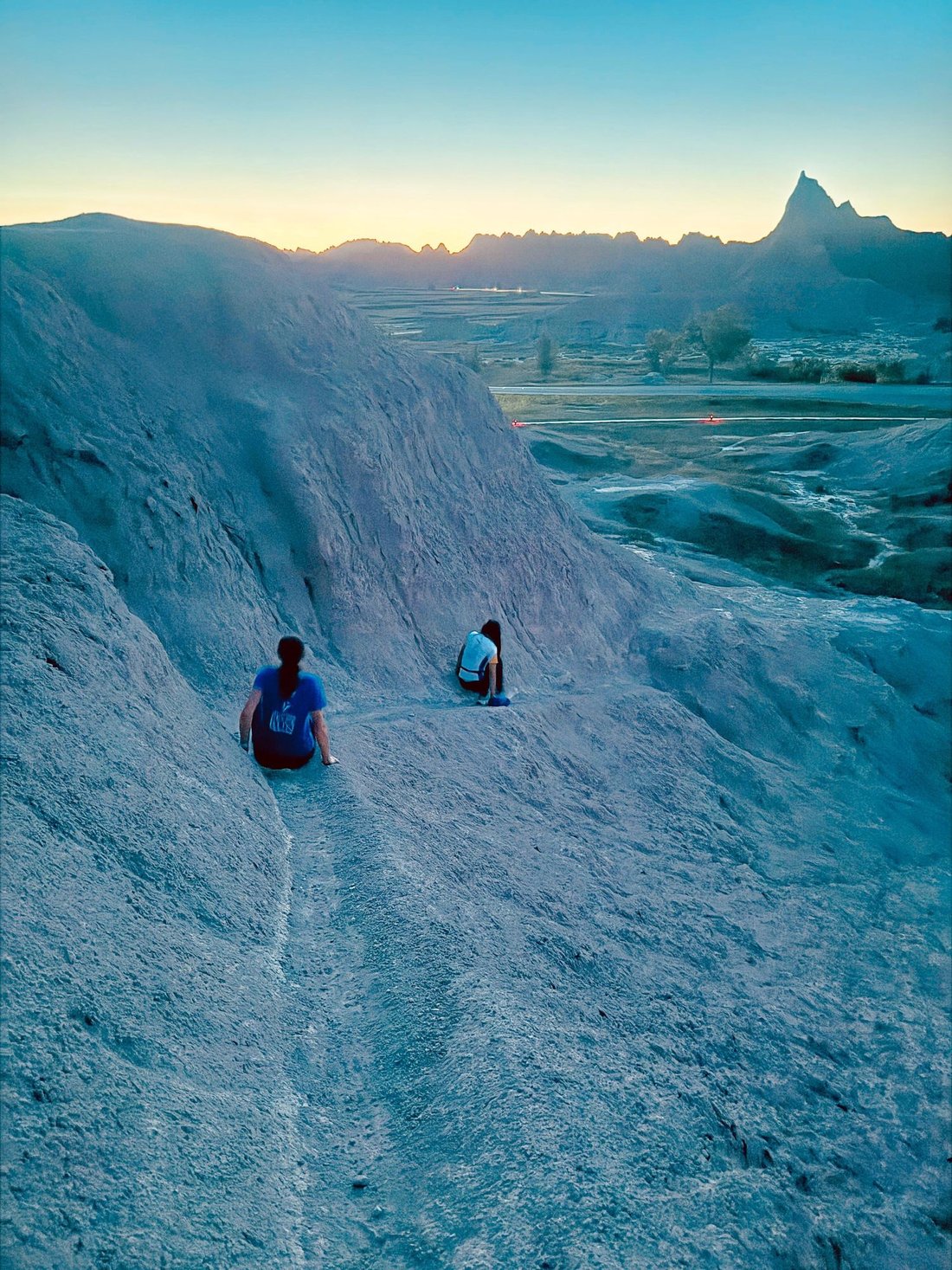
Some of us very enthusiastically walked up the dusty hillside to see the sunset...coming down was more of a challenge!
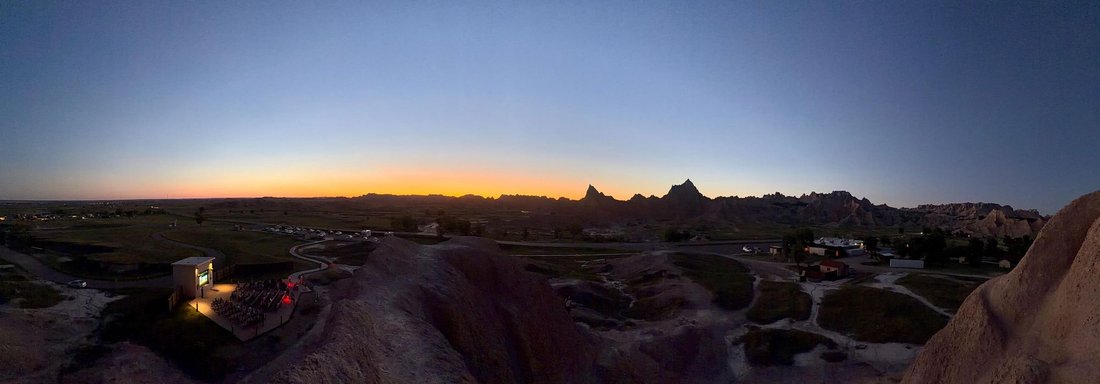
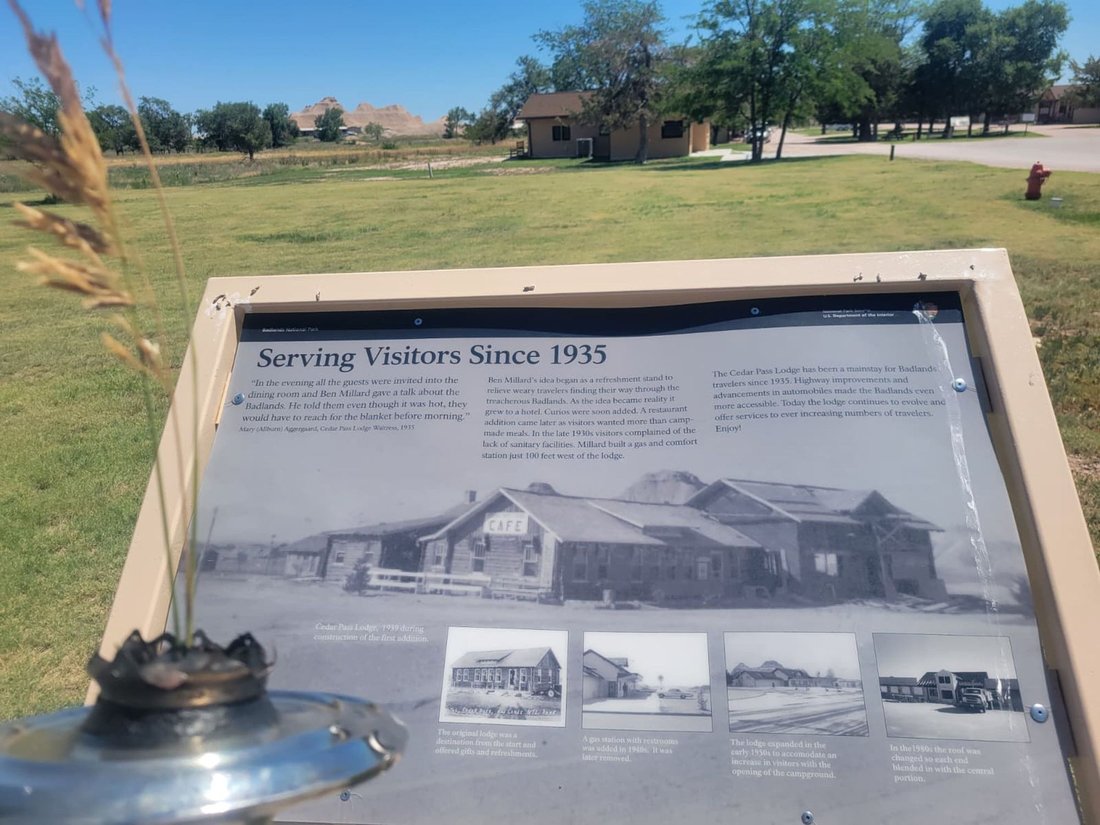
It was a perfect moonless night to enjoy the spectacular Night Sky presentation and viewing at the Cedar Pass Campground Amphitheater in Badlands National Park. We viewed many constellations and stars and even saw the international space station go by!
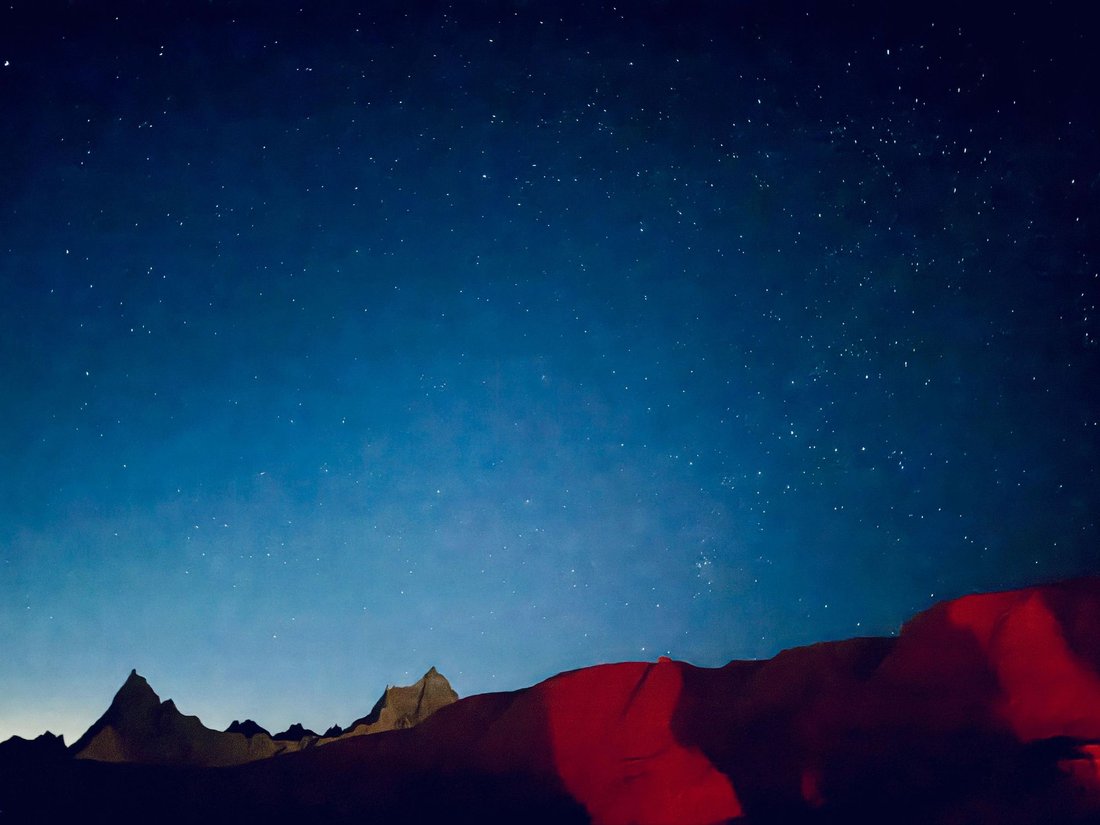
Badlands National Park is one of the premier stargazing destinations in North America, offering views of over 7,500 stars and a pristine view of the Milky Way. With 244,000 acres and virtually no light pollution, the park provides an unmatched astronomical experience.
All facts about the Grasslands, Prarie Dogs The Badlands and the Night Sky Viewing were sourced from the National Parks website.
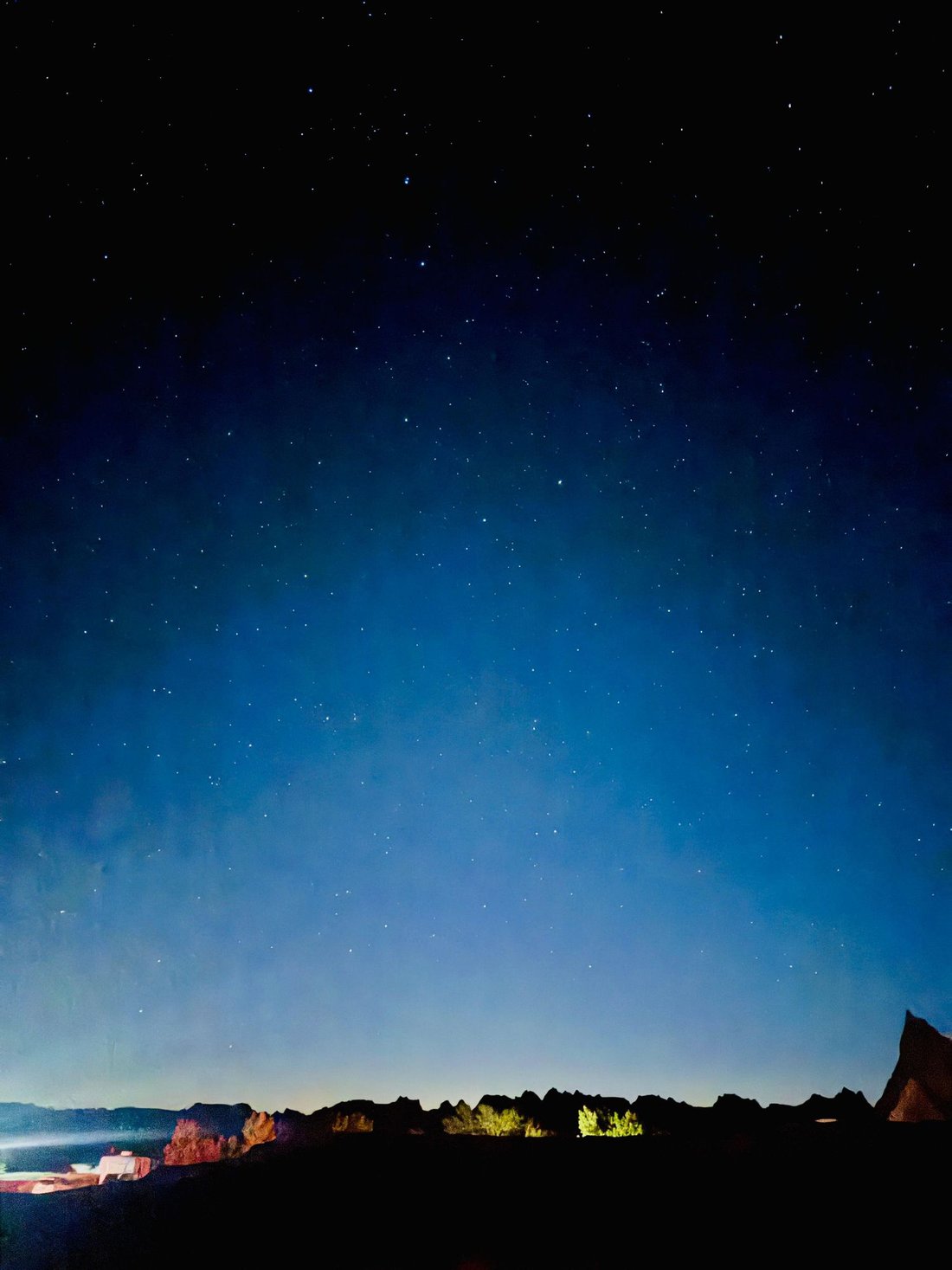
The sun sets pretty late out here- at 10.30pm the sky is still getting dark! We would have had to stay another hour to get the full effect, but we enjoyed our experience immensely.
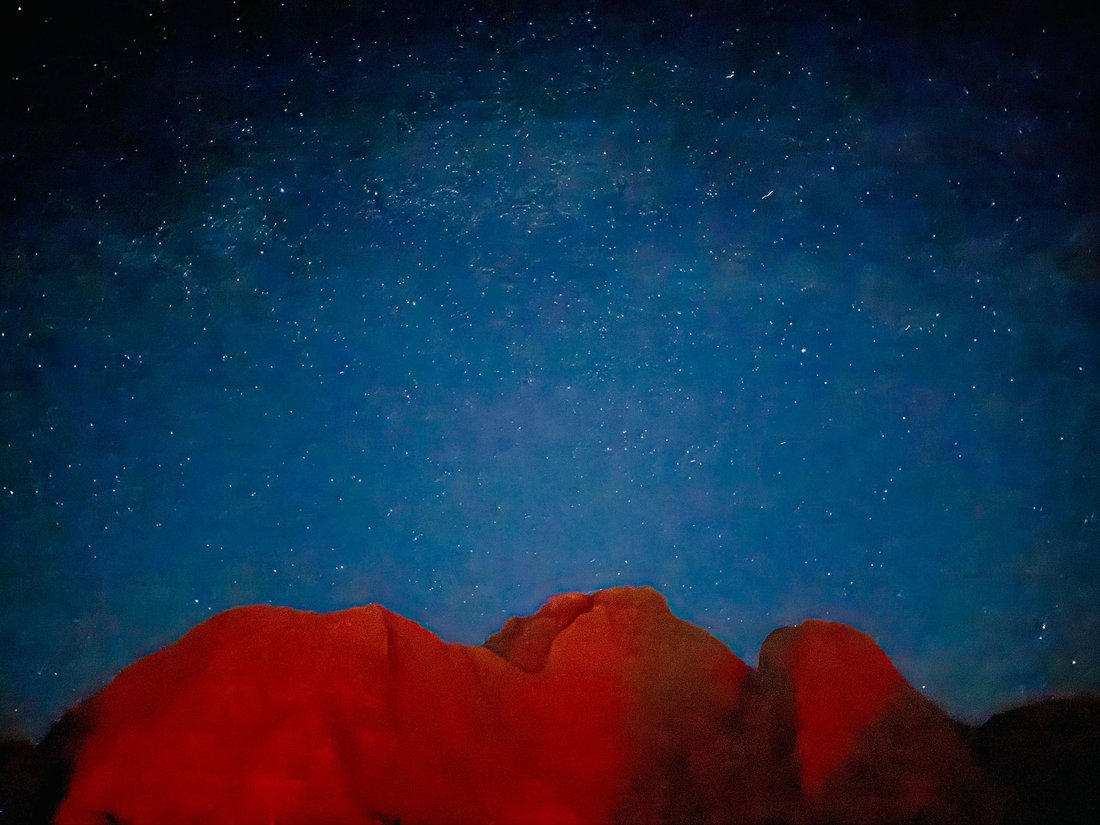
The evening stars come to me with peace breathless. -Sri Chinmoy